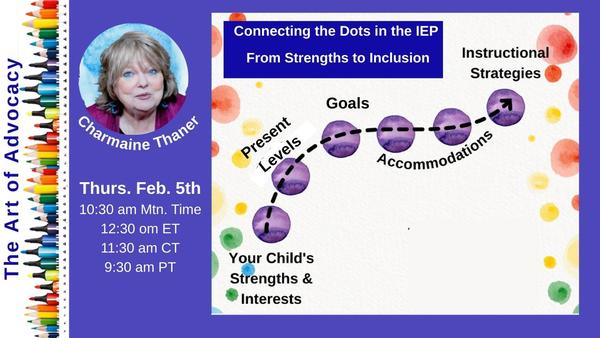
Inclusion is built when the IEP itself tells a clear story about who your child is, how they learn and what adults are responsible for doing because of that.
You already know
what helps your child learn.
You know their strengths.
You know what gets in the way.
You know what actually works.
You’ve shared that information with the school, in emails, meetings, and “About Me” profiles meant to help.
And still, very little changes.
That’s not because you weren’t clear.
It’s because you can only hold the school accountable for what is written in the IEP.
If what you know about your child isn’t written into the IEP: isn't connected to present levels, goals,
accommodations or modifications, and instruction, it stays optional.
And optional doesn’t change your child’s day.
Inclusion doesn’t live in the placement box.
It lives in the dots you help the school team connect throughout the IEP, from strengths to real classroom practice.
What I’ll Walk You Through on Thursday
On Thursday, February 5, I’m going live to show you how to connect those dots so what you know about your child actually drives decisions in the
IEP and in the classroom.
I’ll walk you through a process I call This Is Me, with a little help from AI, not to create a feel-good profile, but to help you turn your child’s strengths into IEP language that actually gets
used.
I’ll also show an example, so you can see what this looks like on paper and in practice.