His name is Marcus.
He's nine years old, in third grade, and he cannot wait for science on
Fridays.
Ask him anything about the ocean, and you may be there for twenty minutes.
He corrects documentaries. He notices when the textbook gets something wrong. His mom says when he starts talking about sea animals, his whole face changes.
That is Marcus.
Curious. Observant. Persistent. Full of knowledge.
And then you read his IEP goals.
Five goals. Not one of them gives any clue that science is the doorway into his language, focus, and learning.
The goals were not
built from who Marcus is.
They could belong to almost any child with reading or writing delays.
That is where an IEP can start to drift.
Because goals should not appear out of nowhere.
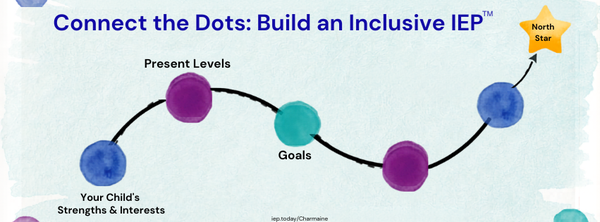
They need to be connected to the Present Levels from what the team already knows about your child's strengths, needs, learning style, and current skills.
One question can help you find out whether it does:
Can you show me where this goal is connected to the Present Levels?
That
question is simple.
And powerful.
Because it asks the team to connect
the goal back to your child.
Not a generic student. Not last year's goal with a new percentage. Not a skill that was chosen because it was easy to measure.
That is what we'll look at inside Connect the Dots: Build an Inclusive IEP™.
On Wednesday, May 6th I'll also show you what a connected goal looks like next to a generic one. The difference is clearer than you'd think, and once you see it, you can't unsee it.