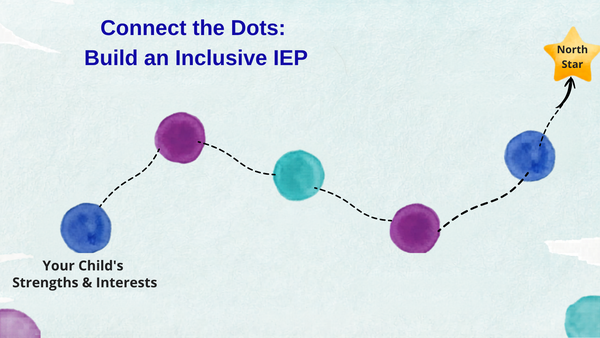
If you looked at your child’s IEP right now, what would it say in the strengths section?
Now here’s the bigger question:
Do any of those strengths show up in the goals?
In the accommodations?
In the way adults support your child in the classroom
every day?
You may already be thinking, No. Not really.
And sometimes, you may hesitate to name what you see as strengths, especially if they are not academic.
You might think:
Does it really matter that my child is friendly?
Is it important that they have strong friendships with classmates?
Does the team really need to know that they love music?
YES!
Absolutely yes.
Because those details are not “extra.”
They are clues.
If your child is friendly and connected to classmates, that
tells the team something important about seating, grouping, peer support, classroom participation, and belonging.
If your child loves music, that may be an open door for learning, communication, and engagement.
Those are real
strengths.
And real strengths should lead to real plans.
But in many IEPs, the strengths section gets filled in because it has to be there.
Not because anyone is planning to use it.
So the strengths just sit there.
Disconnected from the goals.
Disconnected from the accommodations.
Disconnected from the services.
Disconnected from what actually happens in the classroom.
And when the strengths are disconnected, the IEP can start to feel like a list of problems instead of a plan for support, access, learning, and belonging.